
When the Forest Answers Back
What Writing The Werewolf of Cerisay Taught Me About Listening to Nature

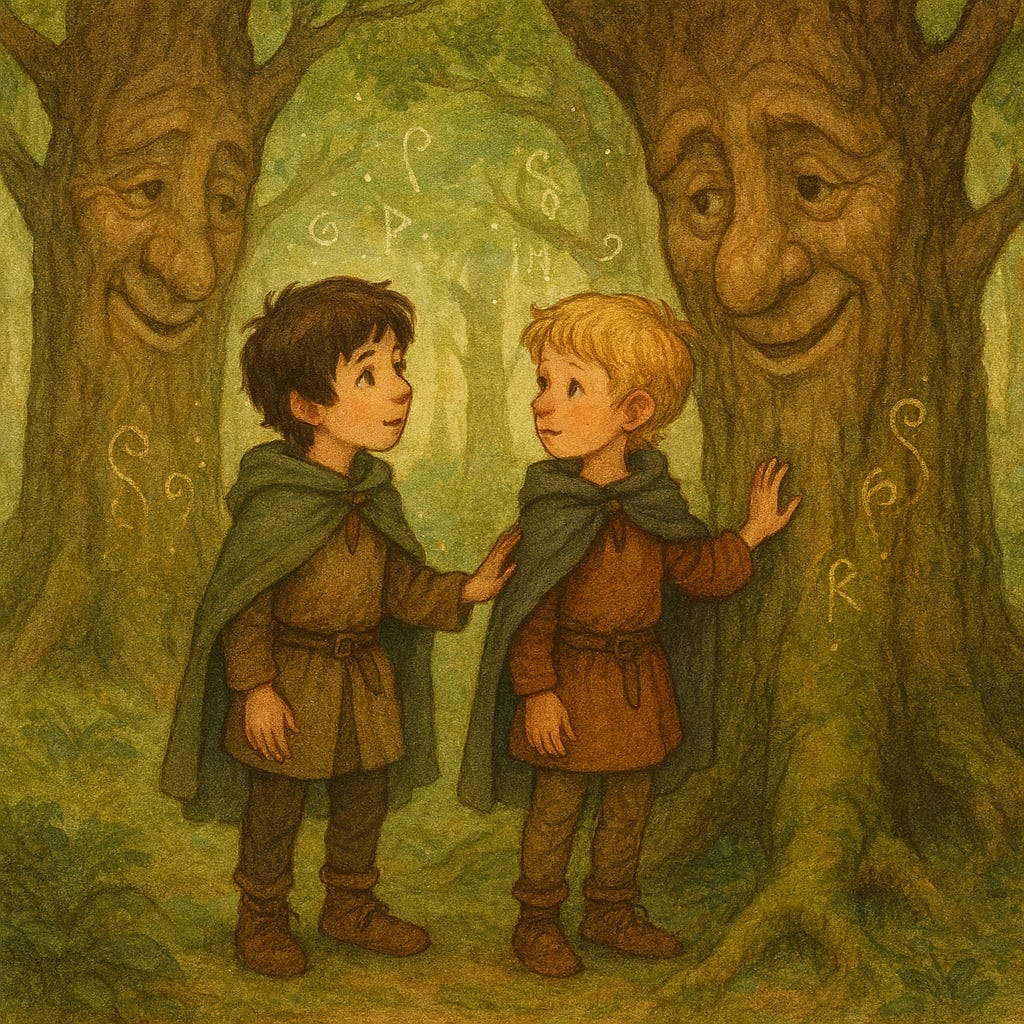
We often talk about using nature.
We talk about managing it, conserving it, harvesting it, surviving it.
But we rarely talk about listening to it.
In Werewolf of Cerisay, the forest does not exist as scenery. It is not a backdrop for danger, nor a neutral wilderness waiting to be conquered. Instead, it speaks sometimes softly, sometimes violently, sometimes through wind, trees, animals, and silence itself. And the story quietly asks a radical question:
What if nature has been talking to us all along and we simply stopped listening?
Nature as Memory, Not Metaphor
One of the most striking ideas in Werewolf of Cerisay is nature remembers.
The woods remember ancestors.
The stones remember voices.
The trees remember what humans try to forget.
When Raoul and Mac encounter the forest spirits—the dryads, the woodland sirens—they are not meeting “magic” in the flashy sense. They are meeting continuity. These beings don’t exist to grant wishes or deliver prophecy. They exist because the land has endured longer than human ambition ever could.
This reframes nature not as mystical decoration, but as historical consciousness.
The forest doesn’t need humans to explain it. Humans need the forest to remind them who they are, AND who we are.
Communication Requires Vulnerability
What I love most is that communication with nature in Werewolf of Cerisay is not unlocked through power.
The boys don’t dominate the forest.
They don’t command it.
They don’t bargain with it.
In fact, the moment they rely too heavily on alchemical tools—medallions and invisibility rings—the forest pushes back. Jolene’s warning is subtle but crucial: nature does not respond to trickery.
To hear the trees, the boys must be fully present—unhidden, unarmored, unimportant.
This mirrors something deeply uncomfortable in modern life: we want insight without exposure. We want wisdom without humility. We want answers without admitting we don’t know what we’re doing.
Nature, in the story, refuses that transaction.
Animals as Messengers, Not Monsters
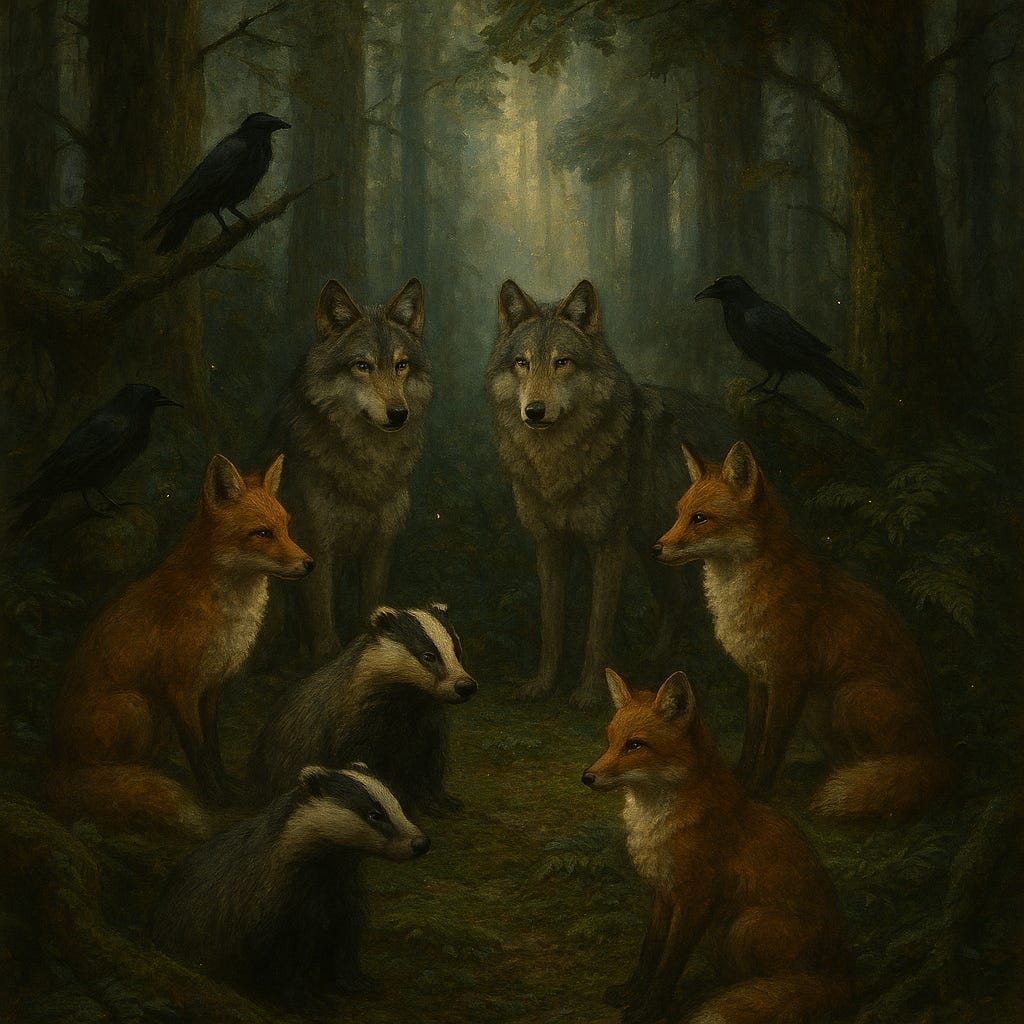
Wolves, crows, foxes, badgers—none of them exist merely as threats.
The werewolf, importantly, is not the same as the wolf.
The wolf is community, instinct, balance.
The werewolf is domination, ego, distortion.
That distinction matters.
When animals respond to the forest song, they are not choosing sides in a human conflict. They are responding to imbalance. The land reacts not because humans are evil, but because power has tipped too far toward consumption and control.
That feels uncomfortably relevant.
The Song of the Woods
One of the most beautiful moments in Werewolf of Cerisay is the idea that the forest sings—not as entertainment, but as defense.
The Canticum Sirenum Silvestrium is not a spell. It is coordination. Wind, roots, leaves, animals, and memory aligning toward restoration.
It suggests that communication with nature is not about speaking to it but joining its rhythm.
Listening becomes action.
Attention becomes participation.
Respect becomes survival.
What This Means Beyond the Story
You don’t need to believe in tree spirits to take this seriously.
Replace “dryads” with ecosystems.
Replace “forest song” with feedback loops.
Replace “ancestors in the stones” with climate data, erosion, extinction, and displacement.
Nature is speaking.
Floods. Fires. Droughts. Silence where birds once were.
The tragedy is not that we can’t hear it—it’s that we’ve trained ourselves not to listen.
Becoming Human Again
At its heart, The Werewolf of Cerisay isn’t about monsters.
It’s about what happens when humans forget they belong to something larger than themselves.
And the hopeful truth the story offers is this:
Listening is still possible.
It requires humility.
It requires slowing down.
It requires letting go of the illusion of control.
But if two children can hear the forest when they stop hiding, maybe we can too.
www.RaoultheGreat.com